Inside Full Piano Restoration: How to Decide If Reviving a Piano Is Worth the Investment
Fort Wayne, United States – February 24, 2026 / Moore Piano /
A piano carries more than sound. It holds memory, craftsmanship, and intention. For owners of heirloom and high-end instruments, the decision to invest in piano restoration is rarely simple. It involves history, value, and trust. Moore Piano shares a clear, experience-driven look at what full piano restoration truly includes and when restoring pianos is a sound decision for owners across Northeast Indiana and Northwest Ohio who want clarity rather than guesswork. Learn more about the process of piano restoration with a regional authority known for precision and care.
Unlike routine tuning or basic repair, restoration is not about quick fixes. It is about returning an instrument to its highest functional and musical potential. When done correctly, restoration preserves the soul of the piano while addressing the realities of age, wear, and environment.
In 2026, homeowners face rising replacement costs, limited availability of well-built new pianos, and growing awareness of craftsmanship loss in mass-produced instruments. In NE Indiana and NW Ohio, many homes still house pianos built during eras when materials and construction standards were fundamentally different from today. These instruments often appear worn or unreliable, yet their core structure remains exceptional.
The challenge lies in knowing whether a piano should be maintained, repaired, or fully restored. Without expert guidance, owners risk over-investing—or worse, discarding an instrument with irreplaceable value. Piano restoration matters now because informed decisions protect both financial investment and musical heritage.
What Piano Restoration Actually Means
Piano restoration is a comprehensive process that addresses the instrument as a system rather than a collection of parts. It evaluates structural integrity, mechanical precision, tonal character, and aesthetic condition together. Restoration is not defined by age alone. It is defined by potential.
For many owners, the term restoration is misunderstood as cosmetic work. In reality, cosmetic refinishing is only one component, and often not the most critical. True restoration begins internally, where tone production and touch response originate.
Moore Piano approaches restoration by first determining what should be preserved. Original materials, when still functional, often outperform modern replacements. The goal is not to erase history but to stabilize and enhance it.
Core Components of Full Piano Restoration
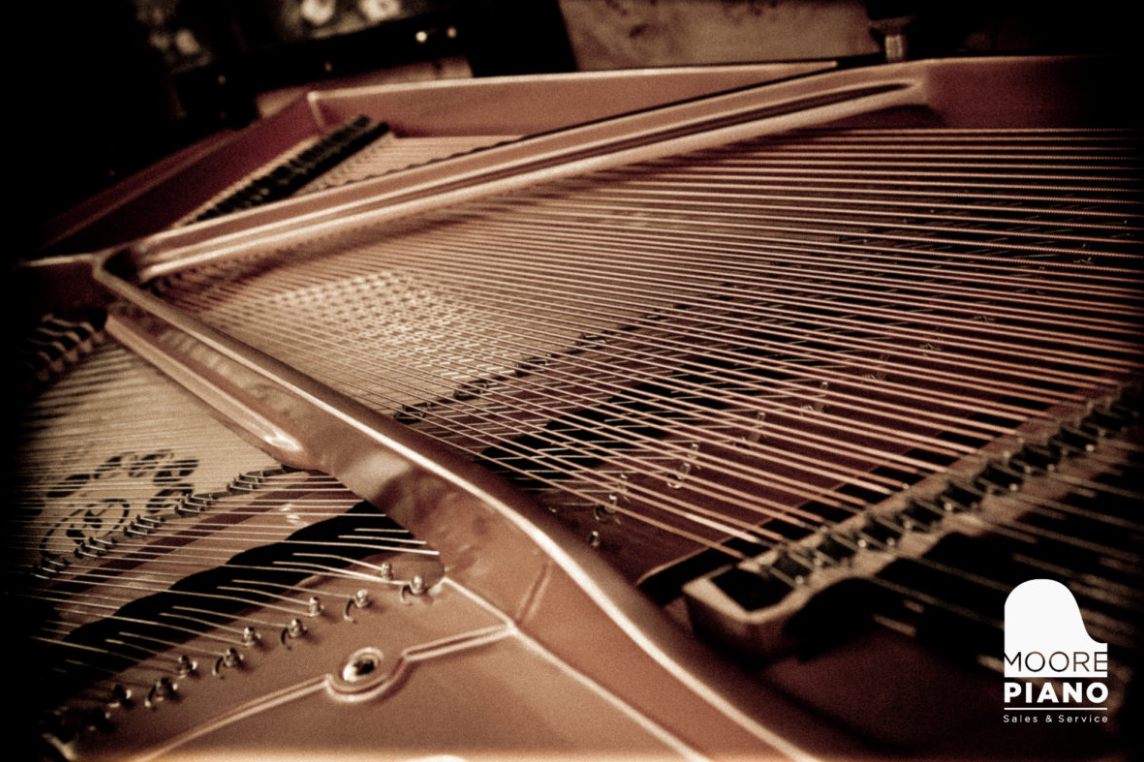
A full restoration addresses every system that affects sound and playability. Each piano requires a tailored scope, but several foundational elements are consistently evaluated.
Key restoration areas typically include:
-
Action rebuilding to restore consistent touch and repetition
-
Hammer replacement or reshaping to recover tonal clarity
-
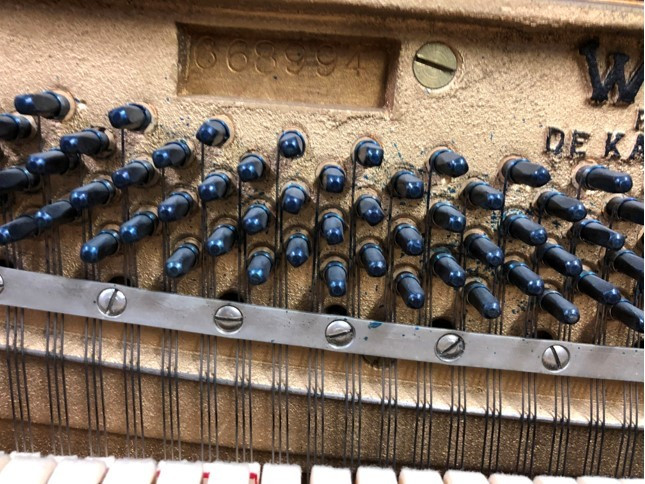
String and pinblock assessment to ensure tuning stability
-
Soundboard evaluation to preserve resonance
-
Structural corrections that protect long-term integrity
These steps are not isolated tasks. Each adjustment influences the others. Skipping or shortcutting one area compromises the entire result.
The Difference Between Repair and Restoration
Repair resolves specific problems. Restoration resolves underlying decline. Understanding this distinction prevents frustration and wasted expense.
A repaired piano may function acceptably for a time but continue to degrade unevenly. A restored piano re-establishes balance across the instrument, allowing all components to age together rather than fail sequentially.
In NE Indiana and NW Ohio, Moore Piano frequently evaluates instruments that have undergone years of piecemeal repair. While well-intended, this approach often delays the inevitable while increasing total cost. Restoration consolidates effort into a single, strategic investment.
When Piano Restoration Is Worth the Investment
Not every piano should be restored. The decision depends on build quality, sentimental value, and intended use. Restoration makes sense when the instrument’s foundation justifies the work.
Restoration is often appropriate when:
-
The piano has strong original construction
-
The instrument holds family or historical significance
-
Replacement cost exceeds restoration value
-
The owner seeks long-term performance reliability
In these cases, restoration is not an expense. It is preservation. It allows an instrument to serve another generation rather than be replaced by something lesser.
Understanding the Role of Craftsmanship
Restoring pianos is as much art as engineering. Precision matters. Experience matters more. Small tolerances in action geometry and voicing dramatically affect musical expression.
Moore Piano’s restoration work reflects decades of hands-on experience with instruments ranging from modest uprights to concert-level grands. This depth allows informed decisions about what to replace, what to rebuild, and what to leave intact.
Craftsmanship also includes restraint. Over-restoration can strip a piano of its character. The best results sound authentic, not manufactured.
Environmental Factors in Regional Restoration Decisions
Climate plays a quiet but powerful role in restoration outcomes. Seasonal humidity swings in NE Indiana and NW Ohio stress wood components and tuning stability. Restoration planning must account for these conditions.
Materials, adhesives, and setup choices are selected with regional performance in mind. This local understanding reduces future maintenance demands and protects the restoration investment.
National restoration shops often overlook these variables. Local authority ensures solutions align with real-world conditions, not controlled environments.

Long Term Value After Restoration
A properly restored piano offers predictability. Tuning holds. Touch remains even. Tone develops rather than degrades. Over time, maintenance costs stabilize instead of escalating.
For many owners, restoration renews emotional connection as much as musical function. Instruments once considered burdens become centerpieces again.
This value is particularly evident in homes and venues across NE Indiana and NW Ohio, where restored pianos often outperform new alternatives in both sound and longevity.
Choosing the Right Restoration Partner
Restoration success depends on trust. Transparency, experience, and local accountability matter more than promises. Moore Piano’s reputation is built on outcomes, not volume.
Owners are guided through realistic options rather than pressured into unnecessary work. This advisory approach reflects a genuine commitment to the instrument’s future.
For a detailed overview of available services, visit Moore Piano, which outlines restoration pathways and planning considerations.
About
Moore Piano has been at the forefront of professional piano service, consistently striving to deliver restoration and repair solutions that improve the way clients preserve and enjoy their instruments. With a relentless focus on integrated planning, the company has refined a process that eliminates costly surprises and creates better long-term outcomes.
Conclusion
Full piano restoration is an informed decision rooted in value, not nostalgia. When the foundation is right, restoration transforms an aging instrument into a reliable, expressive piano built to last. Moore Piano continues to serve as a trusted authority across NE Indiana and NW Ohio for owners seeking clarity and craftsmanship. Learn more or connect directly through the Moore Piano Google Profile.
Contact Information:
Moore Piano
5730 Industrial Rd
Fort Wayne, IN 46825
United States
Ron Moore
(260) 823-2290
https://www.moorepiano.com